When I came to write my essay I found that I had a lot to talk about in regards to online games in particular. So I chose to change the focus of my essay to the ethics of persuasion in online games. Instead of writing about all games in general I think that focusing on one area of games allowed me to go into more detail within the 2000 word limit.
The following is my revised essay plan
I will introduce the subject of persuasion as a whole and talk about the types of persuasion used in games. I will then go on to mention why ethics are important, particularly in video game development.
I will then start by looking at how online games can be considered addictive and who has to take responsibility for that. Do game developers have an ethical responsibility to make sure their games aren't addictive or place warnings on their games? Do games developers purposely intend their games to be addictive and is this ethical?
I will then talk about the positive side to online games and how they could possibly be used to improve society.
I'll conclude by weighing up both sides of the arguement and looking at whether the games industry has a responsibility to change the way online games are designed.
Tuesday, 15 May 2012

Tuesday, 8 May 2012
Jane McGonigal - Can Games Change The World?
http://www.ted.com/talks/jane_mcgonigal_gaming_can_make_a_better_world.html
Jane McGonigal is a games designer who believes that playing games online together can make changes to the world in real life. She says in her talk that gamers work hard in games to solve problems so can we change games so that players work as hard to solve real world problems. Games are all about solving problems for a reward so is it possible to take that and convert it to a real world situation.
"I did my PhD on why we're better in games than we are in real life. And this is a problem that a lot of gamers have. We feel that we are not as good in reality as we are in games."
Mcgonigal makes a very interesting point that in games, we as players, never feel like there are things we can't achieve whereas in real life people often feel the opposite, especially when thinking about world wide problems like poverty or hunger. So is it possible to find a way to harness he optimism that we feel while playing a game and use that in real life.
She goes on to talk about the online RPG World of Warcraft and how games like this can help us to co-operate and to achieve goals. In online RPGs every player has a specific role, whether they are the medic who looks after the team or the warrior who does the most damage, and the only way to be truly successful is to collaborate with other players. Also the missions or quests that you undertake are always suited to your level of play so the player is never presented with anything they can't achieve. The players have to work hard to achieve the goal but it will always be possible.
"They never give you a challenge that you can't achieve. But it is on the verge of what you're capable of. So, you have to try hard, but there's no unemployment in World of Warcraft. There is no sitting around wringing your hands, there's always something specific and important to be done. And there are also tons of collaborators. Everywhere you go, hundreds of thousands of people ready to work with you to achieve your epic mission."
The only problem with games like this is that often the player feels like they are better than reality, because they are constantly being rewarded for achievement, by leveling up etc. Therefore the player becomes more invested in the online environment than in their everyday life. I think this is why players begin to become addicted to online games because of the kind of rewards and achievement they don't feel like they get in their own lives.
"The average young person today in a country with a strong gamer culture will have spent 10,000 hours playing online games by the age of 21. Now 10,000 hours is a really interesting number for two reasons. First of all, for children in the United States 10,080 hours is the exact amount of time you will spend in school from fifth grade to high school graduation if you have perfect attendance."
We can see that players spend a lot of time building skills and investing time in playing games but what kind of skills are gamers learning? And can any of these skills be transferred into real life. There is the co-operation and community building type skills of online games like WoW, the self motivation to keep trying to achieve goals and targets, the sense of productivity that comes from working together as a team to achieve something great.
"We know that we are optimized, as human beings, to do hard meaningful work. And gamers are willing to work hard all the time, if they're given the right work."
In order to experiment whether it is possible to use games to solve real world problems Jane McGonigal designed some games which would test this theory. First there is "World Without Oil", which is a game where the player has to survive in a world with a severe oil shortage. 1,700 people played the game and were subsequently tracked for three years, the results showed that the players went on to make real changes to the way they lived and how they used oil.
"Nobody wants to change how they live just because it's good for the world, or because we're supposed to.But if you immerse them in an epic adventure and tell them, "We've run out of oil. This is an amazing story and adventure for you to go on. Challenge yourself to see how you would survive," most of our players have kept up the habits that they learned in this game."
Another game was "Superstruct at the Institute for the Future" where players were told that the world would end in 23 years if we kept living the way we are now so players had to come up with solutions to save the future in terms of things like energy, health and finance.
""Everybody's on the dream team, and it's your job to invent the future of energy, the future of food, the future of health, the future of security and the future of the social safety net." We had 8,000 people play that game for eight weeks. They came up with 500 insanely creative solutions that you can go online, if you Google "Superstruct," and see."
Another example of people working together to create something is Wikipedia, which is made and edited entirely by volunteers online. Wikipedia is a huge database of knowledge on all kinda of subjects and is used regularly by lots of different types of people. There is also the example of the MP expenses game, when there was the scandal of a lot of MPs using their expenses for ridiculous things in order to go through and sort out all the records, an online game was created in which players would sort through real expenses evidence. Without people participating in this game it wouldn't have been as easy or quick to gather evidence needed to prove which MPs were responsible.
These examples show that if games are used in the right kinds of ways that they can make a difference in the real world. But can games like these examples become as popular as games used purely for entertainment or escapism?
Jane McGonigal is a games designer who believes that playing games online together can make changes to the world in real life. She says in her talk that gamers work hard in games to solve problems so can we change games so that players work as hard to solve real world problems. Games are all about solving problems for a reward so is it possible to take that and convert it to a real world situation.
"I did my PhD on why we're better in games than we are in real life. And this is a problem that a lot of gamers have. We feel that we are not as good in reality as we are in games."
Mcgonigal makes a very interesting point that in games, we as players, never feel like there are things we can't achieve whereas in real life people often feel the opposite, especially when thinking about world wide problems like poverty or hunger. So is it possible to find a way to harness he optimism that we feel while playing a game and use that in real life.
She goes on to talk about the online RPG World of Warcraft and how games like this can help us to co-operate and to achieve goals. In online RPGs every player has a specific role, whether they are the medic who looks after the team or the warrior who does the most damage, and the only way to be truly successful is to collaborate with other players. Also the missions or quests that you undertake are always suited to your level of play so the player is never presented with anything they can't achieve. The players have to work hard to achieve the goal but it will always be possible.
"They never give you a challenge that you can't achieve. But it is on the verge of what you're capable of. So, you have to try hard, but there's no unemployment in World of Warcraft. There is no sitting around wringing your hands, there's always something specific and important to be done. And there are also tons of collaborators. Everywhere you go, hundreds of thousands of people ready to work with you to achieve your epic mission."
The only problem with games like this is that often the player feels like they are better than reality, because they are constantly being rewarded for achievement, by leveling up etc. Therefore the player becomes more invested in the online environment than in their everyday life. I think this is why players begin to become addicted to online games because of the kind of rewards and achievement they don't feel like they get in their own lives.
"The average young person today in a country with a strong gamer culture will have spent 10,000 hours playing online games by the age of 21. Now 10,000 hours is a really interesting number for two reasons. First of all, for children in the United States 10,080 hours is the exact amount of time you will spend in school from fifth grade to high school graduation if you have perfect attendance."
We can see that players spend a lot of time building skills and investing time in playing games but what kind of skills are gamers learning? And can any of these skills be transferred into real life. There is the co-operation and community building type skills of online games like WoW, the self motivation to keep trying to achieve goals and targets, the sense of productivity that comes from working together as a team to achieve something great.
"We know that we are optimized, as human beings, to do hard meaningful work. And gamers are willing to work hard all the time, if they're given the right work."
In order to experiment whether it is possible to use games to solve real world problems Jane McGonigal designed some games which would test this theory. First there is "World Without Oil", which is a game where the player has to survive in a world with a severe oil shortage. 1,700 people played the game and were subsequently tracked for three years, the results showed that the players went on to make real changes to the way they lived and how they used oil.
"Nobody wants to change how they live just because it's good for the world, or because we're supposed to.But if you immerse them in an epic adventure and tell them, "We've run out of oil. This is an amazing story and adventure for you to go on. Challenge yourself to see how you would survive," most of our players have kept up the habits that they learned in this game."
Another game was "Superstruct at the Institute for the Future" where players were told that the world would end in 23 years if we kept living the way we are now so players had to come up with solutions to save the future in terms of things like energy, health and finance.
""Everybody's on the dream team, and it's your job to invent the future of energy, the future of food, the future of health, the future of security and the future of the social safety net." We had 8,000 people play that game for eight weeks. They came up with 500 insanely creative solutions that you can go online, if you Google "Superstruct," and see."
Another example of people working together to create something is Wikipedia, which is made and edited entirely by volunteers online. Wikipedia is a huge database of knowledge on all kinda of subjects and is used regularly by lots of different types of people. There is also the example of the MP expenses game, when there was the scandal of a lot of MPs using their expenses for ridiculous things in order to go through and sort out all the records, an online game was created in which players would sort through real expenses evidence. Without people participating in this game it wouldn't have been as easy or quick to gather evidence needed to prove which MPs were responsible.
These examples show that if games are used in the right kinds of ways that they can make a difference in the real world. But can games like these examples become as popular as games used purely for entertainment or escapism?
Monday, 30 April 2012
Essay Plan
Essay Plan
Introduction
I will introduce how games use persuasion and then go on to
talk about why these things raise questions in terms of the ethics behind games
design. Question whether games
developers have a responsibility to make games more meaningful and something
more than just entertaining or time-wasting.
Argument
I will begin the main body of the essay by outlining some of
the problems that can occur in terms of ethics. I want to talk about
responsibility of having sensitive material in games and if just putting an 18
age rating on a game means that the developer has free reign to put whatever
they like in it. I will use the example of JFK reloaded and the fact that
ethics are being ignored in order to make an impact by being sensationalist. I
also want to use the example of Call of Duty and their inclusion of the player
being able to skip certain parts of the game that may cause offense, is this a
good thing or does it just encourage people to pay more attention to more
sensitive parts of the game by making players curious. Games like JFK reloaded
could have a very different effect if they were just portrayed differently.
I then want to talk about what happens when games are too
persuasive and players become too invested in playing. Can players become
addicted to games? Whose responsibility is it when players do become addicted
and are some games design deliberately to cause this type of reaction? Can the types of games that people get
addicted, like MMORPGs, be used in a more positive way in the future? For
example, making more of the element of teamwork and co-operation.
Conclusion/
I will conclude by saying that games can become more serious
and something that could “change the world” if developers change the way that
they portray games. Do games designers have an ethical responsibility to
harness the possibility of games becoming something more than just a way to
pass time.
Sources
Ethics and Persuasion:
The Ethics of Computer Games – Miguel Sicart
Persuasive Games – Ian Bogost
Psychological Effects of Video Games
Video Game Addiction
http://www.youtube.com/watch?v=R83287N6kFg (Documentary mentioned in the above article)
http://www.telegraph.co.uk/culture/tvandradio/8184386/Is-video-game-addiction-really-so-dangerous.html
(offers a sort of opposing view to the panorama documentary)
Jane Mcgonigal’s TED talk. (WoW)
Thursday, 26 April 2012
Addiction to games
Part of the persuasion in games is getting the player to play them over any other game. So games need to have something about them that keeps you coming back for more. But when does this go from a player wanting to play a game and needing to play it.
Is it even possible for a game to be addictive? And is this a conscious inclusion when developing the game or is it down to the player.
I watched a BBC Panorama documentary which investigated addiction to games, in particular online games. It set out to discover if online games were addictive or whether certain people just have a disposition to become too invested in the game world.
The program interviewed several people who confessed to being "addicted" to games. One game in particular kept coming up, Blizzard's World of Warcraft, which in 2011 had approximately 10.2 million users. http://investor.activision.com/releasedetail.cfm?ReleaseID=647732
WoW is an online game in which players take on roles and play together to complete quests and level up their character. The game is very cleverly designed to make sure that players keep coming back to play and regularly investing time. This is because WoW is subscription based and therefore every month that players return to play the company get more income. There are many factors to the game which help to encourage players to return, the fact that you play cooperatively with other players online, the feeling of improvement and leveling up your character, the rewards that you are given during the game.
During the documentary they interviewed Adrian Hon (Chief director at SixToStart) who said that "I think many people don't necessarily understand how powerful some game mechanics can be", he went on to talk about psychological techniques that were being used when designing games. Such as variable rate of reinforcement. This was discovered when behavioral psychologists tested rats which learnt to feed themselves by pressing a lever. It was shown that when the food came out randomly the rats would just repeatedly press the lever. This has been shown to work in games too, by giving the player a random reward whilst playing, like experience points to level up or items to use in the game, the player gets stuck in a compulsive loop that keeps players wanting to play.
"It's simple but very effective and is thought to explain why some people get addicted to slot machines."
Are age ratings on games enough, should there be warnings about playing the game too much? I know that one online RPG I have played does display a warning before you play the game. Final Fantasy XI online displays a "reminder" every time the player logs in the following message is displayed:
"A Word to Our Players
Exploring Vana'diel is a thrilling experience.
During your time here, you will be able to talk, join,
and adventure with many other individuals in an experience
that is unique to online games.
That being said, we have no desire to see your real life
suffer as a consequence.
Don't forget your family, your friends, your school,
or your work."
I think this is definitely something which should be applied to all online games, similar to the health warnings you get when you start up offline games warning to take regular breaks. But is this enough? Is it simply an action taken by the development company to cover their backs in case people blame them for their games being addictive? Or is it a genuine step in the right direction?
Is it even possible for a game to be addictive? And is this a conscious inclusion when developing the game or is it down to the player.
I watched a BBC Panorama documentary which investigated addiction to games, in particular online games. It set out to discover if online games were addictive or whether certain people just have a disposition to become too invested in the game world.
The program interviewed several people who confessed to being "addicted" to games. One game in particular kept coming up, Blizzard's World of Warcraft, which in 2011 had approximately 10.2 million users. http://investor.activision.com/releasedetail.cfm?ReleaseID=647732
WoW is an online game in which players take on roles and play together to complete quests and level up their character. The game is very cleverly designed to make sure that players keep coming back to play and regularly investing time. This is because WoW is subscription based and therefore every month that players return to play the company get more income. There are many factors to the game which help to encourage players to return, the fact that you play cooperatively with other players online, the feeling of improvement and leveling up your character, the rewards that you are given during the game.
During the documentary they interviewed Adrian Hon (Chief director at SixToStart) who said that "I think many people don't necessarily understand how powerful some game mechanics can be", he went on to talk about psychological techniques that were being used when designing games. Such as variable rate of reinforcement. This was discovered when behavioral psychologists tested rats which learnt to feed themselves by pressing a lever. It was shown that when the food came out randomly the rats would just repeatedly press the lever. This has been shown to work in games too, by giving the player a random reward whilst playing, like experience points to level up or items to use in the game, the player gets stuck in a compulsive loop that keeps players wanting to play.
"It's simple but very effective and is thought to explain why some people get addicted to slot machines."
Are age ratings on games enough, should there be warnings about playing the game too much? I know that one online RPG I have played does display a warning before you play the game. Final Fantasy XI online displays a "reminder" every time the player logs in the following message is displayed:
"A Word to Our Players
Exploring Vana'diel is a thrilling experience.
During your time here, you will be able to talk, join,
and adventure with many other individuals in an experience
that is unique to online games.
That being said, we have no desire to see your real life
suffer as a consequence.
Don't forget your family, your friends, your school,
or your work."
I think this is definitely something which should be applied to all online games, similar to the health warnings you get when you start up offline games warning to take regular breaks. But is this enough? Is it simply an action taken by the development company to cover their backs in case people blame them for their games being addictive? Or is it a genuine step in the right direction?
Monday, 23 April 2012
Can games be documentary?
Defining documentary:
The Oxford dictionary describes documentary as the following:
adjective
noun
|
Filmed documentaries have existed for a long time and have become a very popular form of entertainment. A documentary is factual and often seeks to inform the viewer of a situation, perhaps something they wouldn't normally hear about. They are supposed to be unbiased and simply informative but I think that increasingly documentaries are being used to persuade the audience of something.
But can games be documentaries too? A documentary game would need to be factual and inform the player. Would this be effective in a medium which is seen by most as simply a way to escape reality and have fun.
Social Realism.
Social realism is a genre in film which is almost like documentary but instead of being purely factual it uses a basis of facts and real life experience to make something which is fictional. They are also filmed in a way which could be seen as a documentary. They are often made to make a comment on social or political issues.
An example of this is Abigail's Party (1977) directed by Mike Leigh. Abigail's Party was a social comment on the new middle classes of the 70's and although it was put across as a situation comedy it had a fairly serious subject and aim behind it. Although not completely factual it was based on fact and I think it's popularity was down to it being entirely believable.
I think it would be easier on paper for video games to be social realism as opposed to documentary because although they are based on fact and a comment on the world around us they can be fictional. But could a game like this be effective?
Some games in these sort of genres have already been attempted. Some with more success than others.
JFK Reloaded
JFK reloaded is a "Historical Simulation" game which puts the player in the role of JFK's shooter. The player is scored on how closely they match the reports of the shooting. So the more historically accurate the shot fired is, the higher the score.
The game's developers were quoted as saying that their intention was to "bring history to life" and "we genuinely believe that, if we get enough people participating, we'll be able to disprove, once and for all, any notion that someone else was involved in the assassination of President Kennedy"
The game was not received very well, particularly in America. David Smith (A spokesman for Edward Kennedy, the late president's brother and senator for Massachusetts at the time.) made the following statement: "It's despicable, there's really no further need to comment." The game was generally thought to be in bad taste.
Personally I think one of the main problems with video games tackling a subject such as this is that, generally, video games are regarded as light hearted and exist for the purpose of fun. I think this makes it harder for them to approach a serious or sensitive subject, such as the JFK shooting, because people think it is cheapening the subject or making light of it.
Saturday, 17 March 2012
References
http://www.digra.org/dl/db/09287.38499.pdf
Panorama Documentary on Game Addiction
http://www.youtube.com/watch?v=R83287N6kFg
Panorama Documentary on Game Addiction
http://www.youtube.com/watch?v=R83287N6kFg
Ethics and Persuasion:
The Ethics of Computer Games – Miguel Sicart
Persuasive Games – Ian Bogost
Psychological Effects of Video Games
Video Game Addiction
http://www.bbc.co.uk/programmes/b00wlmj0
(Documentary mentioned in the above article)
http://www.telegraph.co.uk/culture/tvandradio/8184386/Is-video-game-addiction-really-so-dangerous.html
(offers a sort of opposing view to the panorama documentary)
The Potential for Games to be Used as a Persuasive Medium.
With the title in mind I have been considering what to focus on for my essay. Games can be used to persuade in many different ways.
With the title in mind I have been considering what to focus on for my essay. Games can be used to persuade in many different ways.
- There is the obvious fact that a game must persuade a player to engage with it and to decide to play it in the first place. Marketing a game is very important in the industry and with so much competition with other game titles it's important to persuade a player to invest in a game or franchise.
- Games can be a vessel for a writer or developer to portray an idea or value. For example many games have an underlying political or social message.
- There can also be a more direct message than the above example. Instead of politics etc being an underlying message in a larger story the whole point of the game can be to persuade someone to think differently about various social issues.
- There is a great deal of argument that games can persuade players to act more violently if they play games with a lot of violence in them.
- Advertising is very persuasive and can be used to great effect within games. Adverts that are part of games can subconsciously influence the player without them really noticing it was even there to begin with.
- Games can be very persuasive in making the player keep coming back to play them, there are even studies which suggest that games can be highly addictive. Especially multiplayer online games where the player feels a sense of duty to keep playing daily.
- Games can also persuade a player to partake in certain behaviours or activities such as learning new skills, improving things such as memory or being more physically active through playing.
I think what I find most interesting about this subject is the ethics involved in making a game. Because games can be such a persuasive tool and can affect player's lives a great deal I think it's interesting to think about the responsibility of the developers of games. Do they have a responsibility to avoid certain subjects or to take care not to persuade players to act in certain ways. How much do games companies think about their social responsibilities? Is it enough to put an age certificate of 18 on a game, does this then allow a developer to put whatever content they like in?
Wednesday, 22 February 2012
Overall Report.
In this report I intend to outline
the history of Sony as a company, the history of the development of Sony
consoles and my experiences of the Move.me software. Detailing the
history of the company and its products, both gaming and otherwise, has enabled
me to understand Sony as a company and what it would aim to get from releasing
software like Move.me.
"Originally
called Tokyo Tsushin Kogyo (Tokyo Telecommunications Engineering Company),
Sony’s roots go back over half a century to 1946 when it was founded by Masaru
Ibuka and Akio Morita." (http://sony.co.uk/article/id/1060176719725)
The first invention from the Tokyo Tsushin
Kogyo (TTK) company was the electric rice cooker which is still widely used
today. After finding success in Japan the company knew they would need to
expand and begin trading globally. The name TTK was already used so the company
changed their name to Sony in order to appeal more to a worldwide market. Sony
comes from the Latin word Sonus meaning sound and is also said to derive from
the American phrase 'Sonny boy'. It was also chosen because it's a word that
sounds the same and is pronounceable in every language.
Although the name of the company was not
officially changed until 1958 the very first 'Sony' branded product was the
TR-55 transistor radio. This went on sale in 1955 and was followed shortly by a
'pocket sized' transistor radio.
Sony's success and growth as a company
continued in the 60's with the formation of the Sony Corporation of America
(SONAM) Sony became the first Japanese company to offer shares in the USA. The
decade also saw the company develop the world's first direct view portable TV.
The 1970's were also important for Sony in
terms of invention. They saw the invention of the Betamax and the Walkman,
which were arguably two of Sony's most important inventions. The Walkman
especially was a massive hit and was revolutionary in terms of personal
entertainment, for the first time ever people were able to take music with them
and carry it wherever they went. To this day the Walkman brand still exists in
Sony brand mobile phones.
The Walkman and
Betamax really propelled Sony into a household name company all over the world.
Sony's innovation as a company has seen them produce a lot of ground breaking
products and their passion for creating something new and efficient was one of
the reasons for them becoming such a successful company. Sony’s passion
for their products and standard of the hardware of their devices has meant that
they have stayed a household name for many years.
Although Sony
started with electronic items they further branched out into Mobile communications,
music and video games, the latter is what I am going to focus on in this
report. The question is how did
Sony progress from a successful electronics company into one of the leading
video games companies worldwide?
The Playstation was first coming into
creation as early as 1986. Nintendo had been trying to develop CD technology
since the Super Nintendo but they had come across a lot of problems. CD's could
easily be tampered with and there was a serious piracy threat. Nintendo
approached Sony in order to get them to come up with a CD drive that would be
used on the console.
In 1989 the console was due to be announced
but Nintendo are said to have become worried over details of the contract that
would mean that Sony almost have complete control over the console. Hiroshi
Yamauchi (Nintendo President at the time) was so furious that he secretly
cancelled the contract with Sony and instead announced a partnership with
Phillips. Following this development Sony decided to take the technology
they had designed for Nintendo and produce their own console.
Headed by Ken Kutaragi the
Playstation's development was underway in 1990 and was announced in 1993 having
made a lot of changes. They had originally planned to include a cartridge
slot and to make a multimedia system that did more than just play games. This
was all scrapped in favour of making a "Dedicated games console". Key
to the success of the Playstation was the decision to make the console focus on
3D games using a high power CPU and GPU. Once they had the console designed
Sony then had to focus on software, as they were pretty new to the console
world they knew that without a strong line-up of titles the console would fail
so they set about rounding up third party developers. With arcades doing so
well in Japan it was a good idea to get them on side. By setting up deals with
NAMCO, Konami and Williams they were sure to get gamers interested.
On December 3rd 1994 the Playstation was
released in Japan the console was hugely popular in and Sony described it as
their most important product since the Walkman.
By 1995 Sony had its sights set on America.
At E3 in May 1995 the Playstation was unveiled to the US. Sony definitely stole
the show with titles like Ridge Racer, Wipeout and Tekken. On September 9th
that year the Playstation was launched in the US and was an instant success
with many stores selling out of games and peripherals. Sony had made the clever
decision of aiming the console at a slightly older market than usual and the
Playstation was seen as the serious gamer's console.
After the huge success of the Playstation,
Sony set about developing its successor the PS2. It was announced in 1999 and
released in Japan in March 2000.
Due to the success of the Playstation I
think a lot of people were expecting very good things from the second Sony
console. The PS2 was more of a multimedia system with the ability to play DVDs
and also was backwards compatible with Playstation titles. I think the
backwards compatibility was a very wise move as the library of Playstation
games was so huge.
The PS2 initially sold very well due to the
Sony branding and, as with the Playstation, an impressive number of launch
titles. It sold over 98 million units in Japan just one day after its launch.
To this day the PS2 still sells well and has sold an impressive 150 million
units worldwide. It also became the fastest console to reach 100 million units
sold, doing so just over 5 years after its launch.
Although the PS2 had competition from the
Xbox and the much cheaper Gamecube it was the exclusive titles and backwards
compatibility that allowed Sony to stay ahead of the game. Securing titles such
as Grand Theft Auto 3 and the Metal Gear series really helped Sony stay on top.
In September 2004 in conjunction with the release of GTA: San Andreas Sony
released a slim version of the console which breathed new life into the sales
of the console.
The third console from Sony was first
released in 2006 in Japan on November the 11th. It features a blu
ray player instead of the traditional DVD drive as blu ray discs can hold a
larger amount of information and also features the online gaming aspect of the
Playstation Network (PSN).
In 2010 Sony released the Playstation Move.
A camera and controller attachment for the PS3 to compete with the motion based
Wii and Xbox Kinect. The Playstation Move uses controllers similar to the Wii
but has the addition of a camera to detect motion and depth of field.
Sony and Microsoft’s motion add-ons were an
obvious response to the success of the Nintendo Wii console which has sold a
huge number of units and has become one of the bestselling home consoles in the
short number of years since its release in 2006. Seeing that motion control was
vital in the future of gaming, Sony and Microsoft both decided to develop
motion software in order to compete.
Testing the move.me
The move.me software for Playstation 3 is
an application to create games and software in order for people to help take
the Move in a new direction so that its purpose isn't solely for gaming.
The potential applications for the move are
massive it would be applied to anything from bomb disposal to more creative
things like painting and modelling. I also think it's a great idea to get people
from various communities, be they students, professionals or just
enthusiastic hobbyists, to get involved in creating and programming their own
ideas. In recent years we have seen the popularity and success of a lot of open
source communities such as those seen surrounding the Little Big Planet game
and others such as Minecraft and even the App store for iOS. People like being
given tools to develop their own thing and share it with a community so I think
it's definitely a good idea for the Move.me to be available to anyone who has a
PS3 and the Move controllers.
I was happy to be given the chance to test
the move.me and really think about the potential it has in greater depth. I
tested it with four fellow students at University.
My experience of it was pretty limited. We
had access to the console and Move controllers but we didn't have any way of
inputting any code and we found it impossible to come across a lead that would
allow us to connect the PS3 console to a personal computer of any kind.
As we couldn't input anything we were
limited to just waving a sword around, which was interesting but I would have
liked to be able to see more from the program.
The move.me software needs to be more
accessible. The layout is very clinical with lines of code showing on screen
and it's very off putting to someone like me who knows nothing about coding. I
would also say that it needs to be easier to connect to a PC or to have some
way to directly input code to the console. I think the key factor in the
success in something like this is making it accessible to everyone and I think
in its current state it would put a lot of people off and would only really
appeal to coders or those with a lot of technical knowledge.
We agreed that the sword was good fun and
that it would be really great if there was a way you could easily import your
own pictures or 3D models into the software without having to input masses of
code. This way, players could easily build environments or use their own
artwork so anything could be added to the Move controller, not just the
onscreen sword. If there was some way you could load the images onto the PS3
and import them easily I think this would make the software a lot more
accessible to people and give results quickly to get people interested. I think
this is one of the key things about successes like the customisation in Little
Big Planet, it's very simple and a lot can be done quite quickly so anyone can
do it.
I also think that Sony could produce
something similar to the App Store or Xbox 360 indie game marketplace by
creating somewhere that people can upload and share what they have created with
other PS3 owners. I think that the sharing and community part of anything like
this is really important, being able to share and get feedback from other
people worldwide is an attractive factor to a lot of people and would give an
incentive to use the application. Given that Sony already has the Playstation
Network (PSN) I would have thought this would be relatively simple and could be
a specific section or branch of that.
I think the main thing would be to make
things as simple as possible and available and accessible to as many people as
possible. We found the experience of the move.me very limited and not very fun
as we couldn't do anything with it, I think this would be the case for a lot of
people unless it's made more user friendly. I'm sure it would be great if
you had access to a PC and knew how to program but I think the majority of
people wouldn't and would be immediately put off using the software. As I said
even just on appearance my first impressions as someone who isn't a
programmer were fairly negative and I don't think this should be the case as
the Move.me has the ability to produce some really creative and innovative
applications.
In conclusion I think that Sony have definitely become known as a
company that places high importance on innovation and making things available
to the masses. I think they can definitely maintain this with the Move.me
software as I think it has huge potential to be a successful piece of software
as long as it is accessible to as many people as possible.
Bibliography
Testing the Move.me
http://us.playstation.com/ps3/playstation-move/move-me/
The Move.me software isn't a game it's more of an application to create games and software in order for people to help take the Move in a new direction so that it's purpose isn't solely for gaming. Microsoft have done similar things with the Kinect in letting students and enthusiasts program for the Kinect. I think Sony are aiming for the move.me to be more accessible to a larger group of people and require less equipment. The wii motion controllers are also being used outside of gaming in applications such as teaching medical students.
The potential applications for the move are massive. In the video above we can see someone using them to control a robot but this could be developed to control larger vehicles or vehicles where it would be dangerous to have a human driving in it such as in bomb disposal units. Also if the technology for the movement was accurate it could be applied in medicine to help with scans and operations as the sensors are more accurate than Wii Motion. I also think it's a great idea to get people from various communities, be they students, professionals or just enthusiastic hobbyists, to get involved in creating and programming their own ideas. In recent years we have seen the popularity and success of a lot of open source communities such as those seen surrounding the Little Big Planet game and others such as Minecraft and even the App store for iOS. People like being given tools to develop their own thing and share it with a community so I think it's definitely a good idea for the Move.me to be available to anyone who has a PS3 and the Move controllers.
I was happy to be given the chance to test the move.me and really think about the potential it has in greater depth. I tested it with four fellow students at University.
My experience of it was pretty limited. We had access to the console and Move controllers but we didn't have any way of inputting any code and we found it impossible to come across a lead that would allow us to connect the PS3 console to a personal computer of any kind. None of us are programmers but we did manage to find some code online on the Move.me forum and some limited code provided by Sony themselves.
As we couldn't input anything we were limited to just waving a sword around, which was interesting but I would have liked to be able to see more from the program. I appreciate that it is in the beta testing stages but it would have been a lot more impressive if we had been able to see more.
Because of the experience we had with Move.me I have come to the following conclusions.
-The move.me software needs to be more accessible. The layout is very clinical with lines of code showing on screen and it's very off putting to someone like me who knows nothing about coding. I would also say that it needs to be easier to connect to a PC or to have some way to directly input code to the console. I think the key factor in he success in something like this is making it accessible to everyone and I think in it's current state it would put a lot of people off and would only really appeal to coders or those with a lot of technical knowledge.
-We agreed that the sword was good fun and that it would be really great if there was a way you could easily import your own pictures or 3D models into the software without having to input masses of code. This way players could easily build environments or use their own artwork so anything could be added to the Move controller, not just the onscreen sword. If there was some way you could load the images onto the PS3 and import them easily I think this would make the software a lot more accessible to people and give results quickly to get people interested. I think this is one of the key things about successes like the customisation in Little Big Planet, it's very simple and a lot can be done quite quickly so anyone can do it.
-I also think that Sony could produce something similar to the App Store or Xbox 360 indie game marketplace by creating somewhere that people can upload and share what they have created with other PS3 owners. I think that the sharing and community part of anything like this is really important, being able to share and get feedback from other people worldwide is an attractive factor to a lot of people and would give an incentive to use the application. Given that Sony already has the Playstation Network (PSN) I would have thought this would be relatively simple and could be a specific section or branch of that.
I think the main thing would be to make things as simple as possible and available and accessible to as many people as possible. We found the experience of the move.me very limited and not very fun as we couldn't do anything with it, I think this would be the case for a lot of people unless it's made more user friendly. I make these comments as someone who knows nothing about coding, I'm sure it would be great if you had access to a PC and knew how to program but I think the majority of people wouldn't and would be immediately put off using the software. As I said even just on appearance my first impressions as someone who isn't a programmer were fairly negative and I don't think this should be the case as the Move.me has the ability to produce some really creative and innovative applications.
History of the Controller
http://www.videogameconsolelibrary.com/art-controller.htm


The controller has come a long way since the days of the joystick. Its evolution has been just as vital to gaming as the evolution of the consoles themselves.
Early Controllers
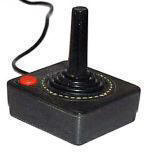
Joysticks featured a single button action and a stick with 8 way directional movement. The Atari 2600 was the first to really popularise joysticks it was also one of the first consoles that allowed the controller to be disconnected. This allowed people to replace faulty controllers. But the Atari 2600 joysticks weren't terribly ergonomically friendly and put strain on the wrist. Also the stick often became unresponsive because of the design. During this time period several similar devices were released some featuring keypads and extra buttons.
Controllers of the 80s and 90s
In the early 1980s a Japanese inventor named Gunpei Yokoi invented the directional pad also known as the d-pad. The D-pad used a cross shaped pad which could be utilised with the thumb instead of using a whole hand like the joystick. Nintendo popularised this invention with the released of the Nintendo Entertainment System (NES)

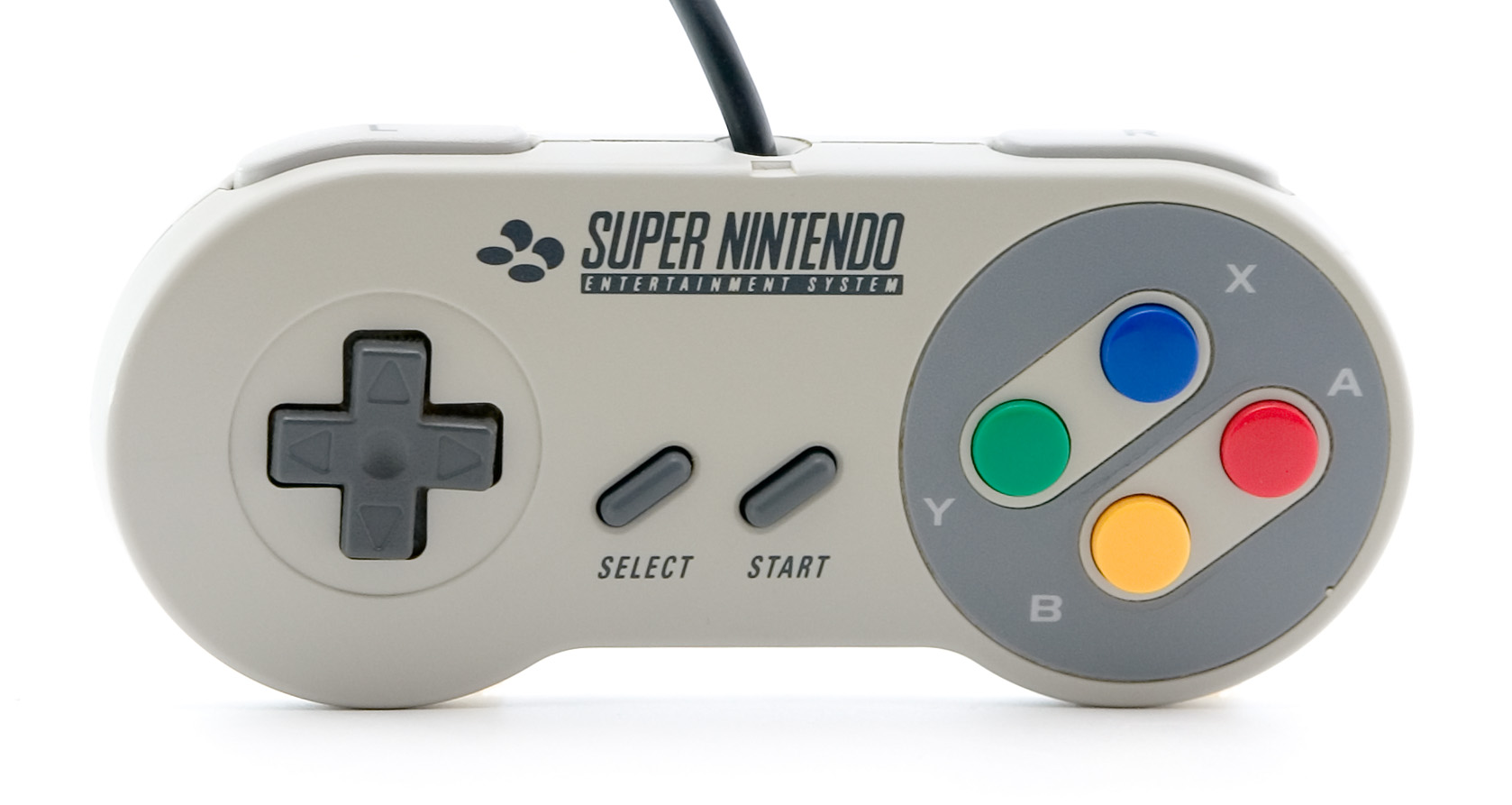
Between 1989 and 1990 a lot of controllers borrowed the D-pad concept including the Sega Genesis controllers. The controller itself was much bigger than the NES controller in an attempt to be more ergonomic. Nintendo returned fire with the SNES controller which added more buttons. It had 6 buttons on the front like the Genesis controller but 2 additional shoulder buttons. The controller produced the term 'double diamond' layout and this layout of buttons has now become pretty much the standard layout of controllers since.
Sony had their answer to the simple SNES controller with the Playstation. It featured a similar layout but added extra shoulder buttons and was made a lot more ergonomic by having extruding parts for the hands to fit around.
Nintendo moved on to create the N64 controller which featured a similar layout to the SNES but added an analog stick and extra buttons.

Sony replied to this with the Dualshock controller for the Playstation which was the first to feature two analogue sticks which revolutionised games especially the first person shooter genre.

Controllers of 2000
Controllers in the early 2000s progressed by introducing pressure sensitive buttons and making things more ergonomic. The Playstation 2 was released with the same Dualshock controller and has since kept with this formula for the Playstation 3 but have made it wireless.


The Dreamcast and Xbox controllers were both much larger than the competitor's controllers.

The Nintendo Gamecube controller featured an additional control stick and additional shoulder button and featured a variation on the double diamond formation by making the A button the biggest as it is the most commonly used. The Gamecube also featured the first available wireless controller, called the Wavebird, and was available separately.
All the controllers of this period feature pretty similar features they just differ in design.
Next Generation Controllers
Controllers start to become wireless as standard. Both the Xbox 360 and the PS3 controllers are wireless as standard. Nintendo were the only company to drastically redesign their controllers in recent years and have begun the trend of motion control.

The Nintendo Wii uses motion controllers as the primary input although there are classic controllers available which look similar to the SNES controller in terms of layout.
The Wii Remote or Wii-mote features bluetooth wireless technology but also has motion control so that the console knows which way it is pointing. A sensor bar picked up the movement of the player and translated that onscreen. It also features a speaker to play sound effects and lights to indicate which player number the controller is assigned to. There is also an attachment of a seperate device called the Nunchuck which features the traditional analog control stick and shoulder buttons and also has motion control so the console can tell when it moves but doesn't have the sensor like the Wii Remote.
The Wii motion technology has since been upgraded to Wii motion plus which is even more responsive than the original. The Wii motion concept has really revolutionised gaming and has opened up video gaming to a family audience.
Because of the huge success of the Wii, Microsoft and Sony developed their own motion control devices. Sony's move features a controller similar to the Wii but has two controllers with motion detection and utilizes a camera to detect depth.
Microsoft's Kinect for Xbox 360 doesn't require a controller at all and uses the Kinect camera to detect body movement. So in essence the player becomes the controller.
Subscribe to:
Posts (Atom)