
The controller has come a long way since the days of the joystick. Its evolution has been just as vital to gaming as the evolution of the consoles themselves.
Early Controllers
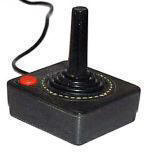
Joysticks featured a single button action and a stick with 8 way directional movement. The Atari 2600 was the first to really popularise joysticks it was also one of the first consoles that allowed the controller to be disconnected. This allowed people to replace faulty controllers. But the Atari 2600 joysticks weren't terribly ergonomically friendly and put strain on the wrist. Also the stick often became unresponsive because of the design. During this time period several similar devices were released some featuring keypads and extra buttons.
Controllers of the 80s and 90s
In the early 1980s a Japanese inventor named Gunpei Yokoi invented the directional pad also known as the d-pad. The D-pad used a cross shaped pad which could be utilised with the thumb instead of using a whole hand like the joystick. Nintendo popularised this invention with the released of the Nintendo Entertainment System (NES)

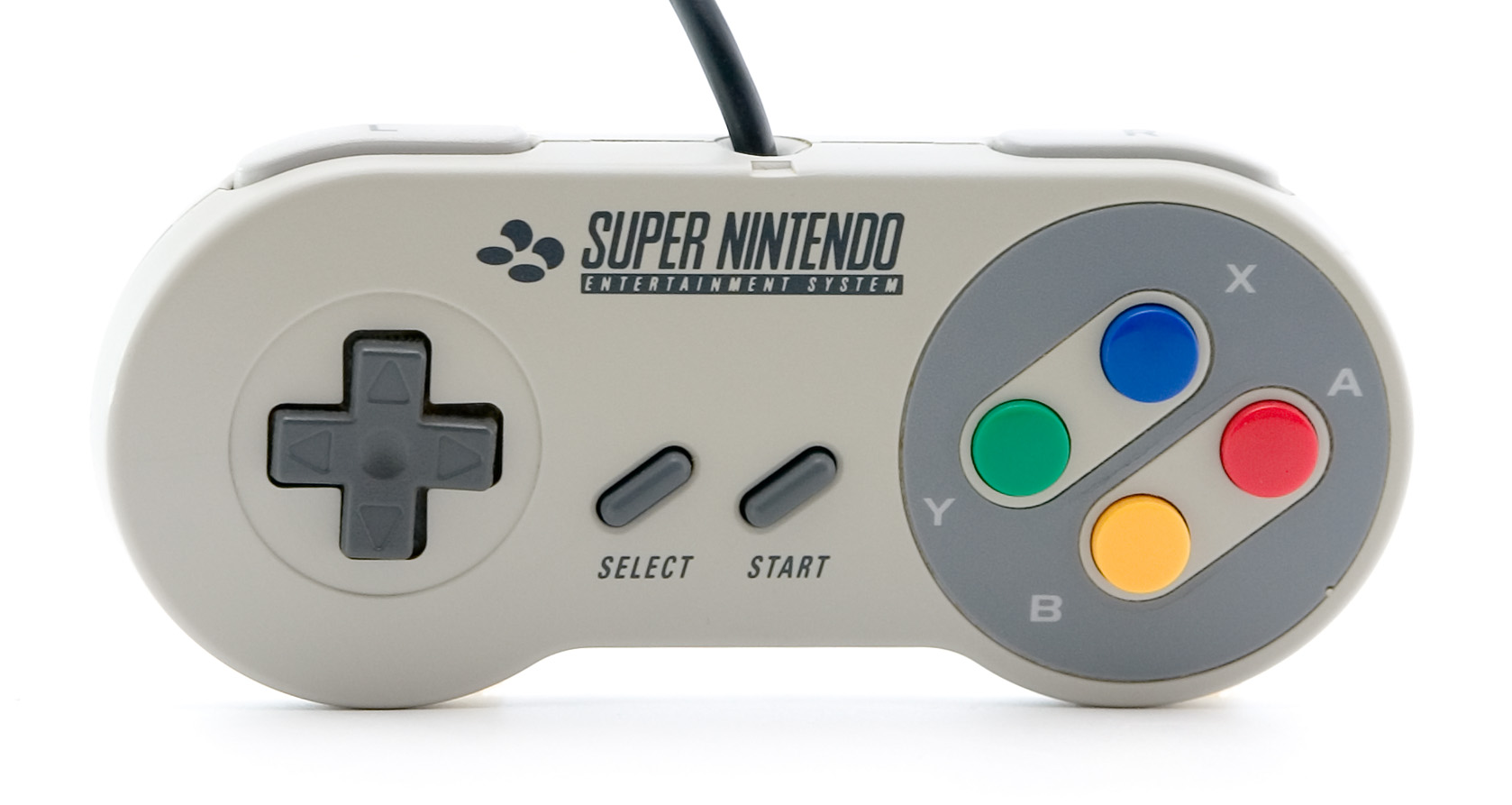
Between 1989 and 1990 a lot of controllers borrowed the D-pad concept including the Sega Genesis controllers. The controller itself was much bigger than the NES controller in an attempt to be more ergonomic. Nintendo returned fire with the SNES controller which added more buttons. It had 6 buttons on the front like the Genesis controller but 2 additional shoulder buttons. The controller produced the term 'double diamond' layout and this layout of buttons has now become pretty much the standard layout of controllers since.
Sony had their answer to the simple SNES controller with the Playstation. It featured a similar layout but added extra shoulder buttons and was made a lot more ergonomic by having extruding parts for the hands to fit around.

Nintendo moved on to create the N64 controller which featured a similar layout to the SNES but added an analog stick and extra buttons.

Sony replied to this with the Dualshock controller for the Playstation which was the first to feature two analogue sticks which revolutionised games especially the first person shooter genre.

Controllers of 2000
Controllers in the early 2000s progressed by introducing pressure sensitive buttons and making things more ergonomic. The Playstation 2 was released with the same Dualshock controller and has since kept with this formula for the Playstation 3 but have made it wireless.


The Dreamcast and Xbox controllers were both much larger than the competitor's controllers.

The Nintendo Gamecube controller featured an additional control stick and additional shoulder button and featured a variation on the double diamond formation by making the A button the biggest as it is the most commonly used. The Gamecube also featured the first available wireless controller, called the Wavebird, and was available separately.
All the controllers of this period feature pretty similar features they just differ in design.
Next Generation Controllers
Controllers start to become wireless as standard. Both the Xbox 360 and the PS3 controllers are wireless as standard. Nintendo were the only company to drastically redesign their controllers in recent years and have begun the trend of motion control.

The Nintendo Wii uses motion controllers as the primary input although there are classic controllers available which look similar to the SNES controller in terms of layout.
The Wii Remote or Wii-mote features bluetooth wireless technology but also has motion control so that the console knows which way it is pointing. A sensor bar picked up the movement of the player and translated that onscreen. It also features a speaker to play sound effects and lights to indicate which player number the controller is assigned to. There is also an attachment of a seperate device called the Nunchuck which features the traditional analog control stick and shoulder buttons and also has motion control so the console can tell when it moves but doesn't have the sensor like the Wii Remote.
The Wii motion technology has since been upgraded to Wii motion plus which is even more responsive than the original. The Wii motion concept has really revolutionised gaming and has opened up video gaming to a family audience.
Because of the huge success of the Wii, Microsoft and Sony developed their own motion control devices. Sony's move features a controller similar to the Wii but has two controllers with motion detection and utilizes a camera to detect depth.
Microsoft's Kinect for Xbox 360 doesn't require a controller at all and uses the Kinect camera to detect body movement. So in essence the player becomes the controller.

No comments:
Post a Comment